


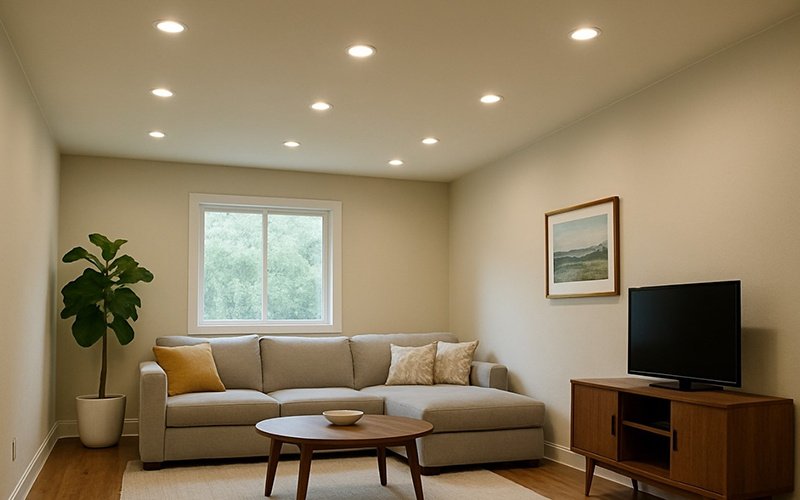
If you’ve ever walked into a room and felt like something was missing from the lighting, you’re not alone. Many homeowners struggle with dark corners, harsh shadows, or outdated fixtures that just don’t work anymore. That’s where LED recessed lighting comes in. It’s one of the easiest ways to transform any room without making it feel cluttered or busy.
I’ve helped friends and family pick out lighting for their homes, and recessed lighting is almost always the first thing I suggest. It sits flush with your ceiling, gives off clean and even light, and works in nearly every room. Whether you’re renovating a kitchen or just want to brighten up your living room, this guide will walk you through everything you need to know.
What Is LED Recessed Lighting?
LED recessed lighting refers to small light fixtures installed directly into your ceiling. Unlike traditional lamps or pendant lights, these fixtures sit inside a hole cut into the ceiling, so they don’t hang down or take up visual space. The “LED” part means they use light-emitting diodes instead of old-fashioned bulbs.
LEDs are different because they use much less electricity and last a lot longer. A typical LED recessed light can last around 25,000 hours, while older bulbs might only last 1,000 hours. This means fewer trips up the ladder to replace bulbs. LED recessed lighting also produces very little heat, which makes it safer for ceilings, especially in older homes with wood framing nearby.
Why Homeowners Are Switching to LED Recessed Lighting
There’s a reason LED recessed lighting has become so popular over the past several years. It solves a lot of problems that older lighting systems created. For starters, it gives rooms a clean, modern look. There are no bulky fixtures hanging from the ceiling, which makes spaces feel larger and more open.
Another big reason people switch is energy savings. LED recessed lighting uses up to 75% less energy than incandescent bulbs. Over time, that adds up to real savings on your electric bill. I switched my own kitchen lights to LED recessed fixtures a couple of years ago, and I noticed a small but noticeable drop in my energy bill within the first few months.
Finally, these lights are incredibly versatile. You can use them in kitchens, bathrooms, bedrooms, hallways, basements, and even outdoors. Few lighting options offer that kind of flexibility.
How LED Recessed Lighting Works
Understanding how these lights work can help you make better choices when shopping. LED recessed lighting fixtures have two main parts: the housing and the trim. The housing is the part that goes inside the ceiling. It holds the wiring and the LED module. The trim is the visible part you see from below, and it comes in many styles and finishes.
Inside the housing, the LED chips produce light using electricity passing through a semiconductor material. This process creates very little wasted energy, which is why LEDs run cooler than older bulbs. Some LED recessed lights have the LED built directly into the fixture, called “integrated LED.” Others use replaceable LED bulbs, similar to older bulb shapes but with LED technology inside.
Knowing this difference matters because integrated LED fixtures usually last longer overall, but if something breaks, you may need to replace the whole unit instead of just a bulb.
Types of LED Recessed Lighting Fixtures
Not all LED recessed lighting is the same. There are several types, and choosing the right one depends on your room and your goals.
Standard recessed lights are the most common. They sit flush with the ceiling and point straight down, providing general room lighting.
Gimbal or adjustable recessed lights can be tilted to point light in different directions. These are great for highlighting artwork, shelves, or specific areas of a room.
Baffle trim lights have a textured interior that reduces glare, making them ideal for living rooms and bedrooms where comfort matters more than bright task lighting.
Wafer or slim profile lights are extremely thin and don’t require deep ceiling space, which makes them perfect for homes with shallow ceilings or those without much room for traditional housings.
Choosing the right type often comes down to the room’s purpose. A kitchen might benefit from brighter standard lights, while a bedroom might feel cozier with baffle trims.
Choosing the Right Brightness for Each Room
One of the biggest mistakes people make with LED recessed lighting is picking the wrong brightness level. Brightness is measured in lumens, not watts, when it comes to LEDs. More lumens mean more light output.
Different rooms need different lumen levels. Kitchens and bathrooms usually need brighter lighting because of tasks like cooking, shaving, or applying makeup. Living rooms and bedrooms often feel better with softer, warmer lighting for relaxing.
Here’s a simple table to help guide your choices:
| Room Type | Recommended Lumens per Fixture | Suggested Color Temperature |
|---|---|---|
| Kitchen | 700–800 lumens | 3000K–4000K |
| Bathroom | 600–800 lumens | 3000K–4000K |
| Living Room | 400–600 lumens | 2700K–3000K |
| Bedroom | 300–500 lumens | 2700K |
| Hallway | 400–500 lumens | 3000K |
Choosing the right brightness makes a huge difference in how comfortable a room feels. Too bright can feel harsh, while too dim can make tasks difficult.
Understanding Color Temperature
Color temperature is measured in Kelvin (K) and tells you whether a light looks warm (yellowish) or cool (bluish-white). This matters a lot with LED recessed lighting because it sets the mood of a room.
Lower Kelvin numbers, like 2700K, produce a warm, cozy glow similar to old incandescent bulbs. This works well in bedrooms, living rooms, and dining areas where you want a relaxing atmosphere.
Higher Kelvin numbers, like 4000K or 5000K, produce a bright, white light that feels more energizing. This is often used in kitchens, garages, offices, and bathrooms where you need to see details clearly.
I personally prefer 3000K for most rooms because it strikes a nice balance. It’s not too yellow and not too clinical. If you’re unsure, many LED recessed lights now come with adjustable color temperature settings, so you can switch between warm and cool depending on your mood or the time of day.
How Many Recessed Lights Do You Need?
Figuring out how many LED recessed lights you need depends on the size of the room and the brightness of each fixture. A common rule of thumb is to divide the room’s square footage by 1.5 to get a rough number of fixtures, though this can vary based on ceiling height and room purpose.
For example, a 12×12 foot room (144 square feet) might need around 6 fixtures for general lighting, spaced evenly apart. Larger rooms or rooms with high ceilings may need more fixtures or higher lumen output per fixture.
Here’s a quick reference table:
| Room Size (sq ft) | Approximate Number of Lights |
|---|---|
| 100 | 4–5 |
| 150 | 6–7 |
| 200 | 8–9 |
| 250 | 10–11 |
| 300 | 12–13 |
Spacing matters too. Lights placed too close together can create hot spots, while lights spaced too far apart leave dark areas. A general spacing guideline is to place fixtures about 4 to 6 feet apart, depending on ceiling height.
Installation: DIY or Hire a Professional?
This is a question I get asked a lot. The honest answer depends on your comfort level with electrical work and your local building codes.
If you’re replacing existing recessed lights with new LED versions, this is often a simpler task. Many newer LED recessed lights are designed as “retrofit” kits that fit into existing housings, requiring no major rewiring.
However, if you’re installing new recessed lighting from scratch, this involves cutting holes in your ceiling, running new wiring, and connecting to your electrical panel. This is more complex and often requires a licensed electrician, especially because mistakes with electrical work can be dangerous.
My honest suggestion is this: if you’re comfortable with basic home improvement and your local codes allow it, retrofit installations are very doable as a weekend project. But new installations, especially anything involving your electrical panel or attic wiring, are best left to professionals. The cost of hiring an electrician is often worth the peace of mind and safety.
LED Recessed Lighting and Energy Efficiency
Energy efficiency is one of the biggest selling points of LED recessed lighting, and for good reason. LEDs convert most of their energy into light rather than heat, unlike incandescent bulbs that waste a lot of energy as heat.
According to the U.S. Department of Energy, widespread LED adoption could save the country billions of dollars in energy costs over the coming years. On a smaller scale, this means real savings for your household too.
If you have a home with 20 recessed lights and switch them all from incandescent to LED, you could see a noticeable reduction in your monthly electric bill. Plus, since LEDs last so much longer, you’re also saving money on replacement bulbs over time.
Many LED recessed lights are also compatible with dimmer switches, which can further reduce energy use when you don’t need full brightness. Just make sure the dimmer switch is labeled as LED-compatible, since not all older dimmers work properly with LED bulbs.
Smart LED Recessed Lighting Options
Smart technology has made its way into recessed lighting, and it’s honestly pretty exciting. Smart LED recessed lights can be controlled through smartphone apps, voice assistants, or smart home systems.
With smart LED recessed lighting, you can adjust brightness, change color temperature, set schedules, and even create different lighting “scenes” for different activities. For example, you could have a bright “cooking” scene in the kitchen and a softer “dinner” scene for the evening.
Some smart recessed lights also offer color-changing capabilities, allowing you to switch between warm white, cool white, and even colored lighting for parties or special occasions.
While smart options cost more upfront, many people find the convenience worth it. Being able to turn off all the lights in your house from your phone, or set lights to turn on automatically when you get home, adds a nice layer of comfort and security to daily life.
Common Mistakes to Avoid
Even with how simple LED recessed lighting seems, there are a few common mistakes people make.
Choosing the wrong size: Recessed lights come in different diameters, commonly 4, 5, and 6 inches. Smaller rooms or lower ceilings often look better with smaller fixtures, while larger rooms can handle bigger ones.
Ignoring dimmer compatibility: Not all LEDs work well with all dimmers. Flickering or buzzing can occur if they’re mismatched.
Poor placement planning: Placing lights without a plan can lead to shadows or uneven lighting. Always sketch out a layout before installation.
Skipping insulation contact (IC) rated fixtures: If your recessed lights will be near insulation in the attic, make sure they are IC-rated to prevent fire hazards.
Avoiding these mistakes can save you time, money, and frustration down the road, and ensures your LED recessed lighting performs the way it should for years to come.
Maintenance and Longevity Tips
One of the best things about LED recessed lighting is how little maintenance it requires. Unlike older bulbs that burn out frequently, LEDs are built to last a long time, often 15 to 25 years with normal use.
That said, a little care goes a long way. Dust can build up on trims and lenses over time, which can slightly dim the light output. Wiping down fixtures every few months with a soft, dry cloth keeps them looking and performing their best.
If a fixture starts flickering, it’s usually not the LED itself but rather a loose connection or an incompatible dimmer switch. Checking these connections, or having an electrician check them, can solve the issue quickly.
Also, keep an eye on heat buildup, especially in enclosed ceiling spaces. While LEDs run cooler than older bulbs, proper ventilation still helps extend their lifespan. Following manufacturer guidelines for IC-rated and non-IC-rated fixtures ensures everything stays safe and efficient for years to come.
Cost Breakdown: Is LED Recessed Lighting Worth the Investment?
Let’s talk numbers, because cost is often the deciding factor for many homeowners.
| Item | Estimated Cost (per fixture) |
|---|---|
| Basic LED Recessed Light | $10–$25 |
| Smart LED Recessed Light | $25–$60 |
| Professional Installation (per fixture) | $100–$200 |
| DIY Retrofit Kit | $15–$40 |
While the upfront cost can add up, especially for whole-home installations, the long-term savings on energy bills and bulb replacements often make up for it. Many homeowners find that within a few years, the energy savings alone help offset the initial investment, not to mention the added home value and improved appearance.
Conclusion
LED recessed lighting is one of those upgrades that quietly makes a huge difference. It brightens up your home, saves energy, lasts for years, and gives every room a clean, modern look. Whether you’re updating a single room or planning a whole-home lighting overhaul, taking the time to choose the right fixtures, brightness, and placement pays off in the long run.
If you’re ready to upgrade your home with LED recessed lighting, start small. Try one room first, see how it transforms the space, and go from there. Your home (and your energy bill) will thank you.
Frequently Asked Questions
How long does LED recessed lighting last?
Most LED recessed lighting fixtures last between 15 and 25 years with normal daily use, which is far longer than traditional bulbs.
Can I install LED recessed lighting myself?
Retrofit kits that fit existing housings are often DIY-friendly. New installations involving electrical wiring usually require a licensed electrician for safety.
What size LED recessed lights should I choose?
Common sizes are 4, 5, and 6 inches. Smaller rooms or lower ceilings typically look better with 4-inch fixtures, while larger rooms suit 6-inch fixtures.
Is LED recessed lighting dimmable?
Yes, most LED recessed lighting is dimmable, but make sure your dimmer switch is labeled as LED-compatible to avoid flickering.
How many recessed lights do I need for a room?
A general rule is to divide your room’s square footage by 1.5, then adjust based on ceiling height and desired brightness.
Does LED recessed lighting get hot?
LED recessed lighting produces much less heat than traditional bulbs, making it safer for ceilings and reducing fire risk when properly installed.
