hassan@opplecottage.com
A practical guide to choosing low-maintenance windows for bedrooms, kitchens, bathrooms and modern homes
Good windows are not only about views. They affect how fresh a room feels, how easy it is to clean, how much warmth stays inside and how naturally the home works from day to day. When old windows become draughty, difficult to open or demanding to maintain, replacing them can make the entire home feel more comfortable.
For homeowners who want a practical and flexible solution, tilt-and-turn uPVC windows are an excellent option. They combine two useful opening functions in one window. The sash can tilt inward from the top for gentle ventilation, or open fully inward from the side for stronger airing and easier cleaning.
This makes the window type especially useful in rooms where ventilation matters, such as bedrooms, kitchens, bathrooms, utility rooms and home offices. Combined with uPVC frames, the result is a low-maintenance window solution that suits many homes, summer houses and renovation projects.
Two opening functions in one window
The main advantage of a tilt-and-turn window is flexibility. With one handle, the window can usually be set in different positions. In the tilt position, the top of the sash opens inward slightly. This allows fresh air to enter in a controlled way without the window standing wide open.
In the turn position, the window opens inward from the side. This gives a much larger opening for rapid ventilation and makes it easier to clean the outside of the glass from inside the room.
This dual function is useful in everyday life. On a mild day, the tilt function can provide comfortable airflow without creating a strong draught. After cooking, showering or sleeping, the turn function can help air out the room quickly.
The tilt position is especially practical in bedrooms. Many people want fresh air at night, but do not want a window standing fully open. In kitchens, it can help release steam and cooking smells. In bathrooms and utility rooms, it can support moisture control.
The turn function is practical when more air is needed or when the window needs cleaning. This is particularly valuable in upper-floor rooms, apartments or homes where outdoor access to the window is difficult.
A tilt-and-turn window gives the homeowner more control over the indoor climate. It is a small mechanical detail, but it can make daily ventilation much easier.
Why uPVC is a sensible choice
uPVC is popular for windows because it requires little maintenance and handles moisture well. Unlike timber, it does not need regular painting, sanding or oiling. The surface can usually be cleaned with mild soapy water, which makes it practical for busy households.
In climates with rain, frost, wind and humidity, exterior window frames must withstand a lot. Timber can be beautiful and durable when maintained correctly, but it needs care. If paint cracks or wears away, moisture can enter the wood. uPVC avoids much of this issue because the material does not absorb moisture in the same way.
For many homeowners, the appeal is simple: uPVC windows are easy to live with. They look clean, require limited care and can be a cost-effective choice when several windows need replacing at the same time.
The material can also work well visually. White uPVC windows suit many modern houses, renovated homes and summer houses. If the home already has uPVC doors or windows, new tilt-and-turn windows in the same style can help create a more consistent façade.
Still, the full window quality matters. The frame profile, glazing, seals, hinges and tilt-and-turn mechanism all need to be reliable. A window with poor hardware can become frustrating, even if the frame material is practical.
A good uPVC tilt-and-turn window should feel stable, close tightly and move smoothly between its different opening positions.
Ventilation for healthier indoor air
Fresh air is important in every home. Everyday activities such as cooking, showering, drying clothes and sleeping all affect indoor air quality. Without proper ventilation, moisture, odours and stale air can build up.
Tilt-and-turn windows make ventilation easier because they offer different levels of airflow. The tilt function is ideal for gentle, regular ventilation. It allows air to enter without opening the full window, which can be useful when the weather is cool, windy or unpredictable.
The full turn function is better for short, effective airing. Opening the window wide for a few minutes can refresh a room quickly. This is often useful in winter, where it is better to ventilate efficiently for a short time rather than leave a window slightly open for hours.
In bedrooms, better ventilation can make the room feel fresher in the morning. In bathrooms, it can help remove humid air after showers. In kitchens, it helps with steam and cooking smells. In home offices, it can make long working days more comfortable.
Ventilation should always be matched with the rest of the home’s ventilation system. A window is not always enough on its own, especially in wet rooms. But as part of daily habits, tilt-and-turn windows make fresh air easier to manage.
Easy cleaning from inside
One of the most practical benefits of tilt-and-turn windows is cleaning. Because the sash can open inward, the outside of the glass is often easier to reach from inside the home. This can make a significant difference in upper-floor rooms and apartments.
Traditional windows can sometimes require ladders, outdoor access or awkward reaching. With inward-opening windows, cleaning becomes safer and simpler. That means it is more likely to be done regularly.
This is useful not only for glass, but also for frames, seals and drainage details. When the window opens inward, it is easier to inspect the moving parts and remove dirt from areas that might otherwise be ignored.
Homes in exposed areas may collect pollen, dust, salt, traffic dirt or garden debris on windows. Easy cleaning makes it simpler to keep the windows looking good and functioning well.
However, the room layout should be considered. Since the window opens inward, there must be space for the sash. Deep window sills, plants, curtains, blinds or furniture can get in the way. Before choosing this window type, it is worth checking how the opening movement will work in the room.
Rooms where tilt-and-turn windows are especially useful
Tilt-and-turn windows can work in many parts of the home, but some rooms benefit more than others.
In bedrooms, the tilt function is particularly valuable. It allows fresh air without opening the window fully. This can make night ventilation more comfortable and easier to control.
In kitchens, the combination of tilt and full opening is useful. Gentle ventilation can help with everyday cooking smells, while full opening can quickly release steam and heat.
In bathrooms, moisture control is important. A tilt-and-turn window can help remove humid air, especially when used together with proper ventilation. Frosted glass may be useful here for privacy.
In utility rooms, the window can help with damp air from laundry, cleaning and storage. Easy cleaning is also practical in a room where dust, moisture and daily activity are common.
In home offices, controlled airflow can make the room more comfortable during long periods of work. The tilt position can provide fresh air without papers blowing around or cold draughts becoming uncomfortable.
In summer houses, uPVC tilt-and-turn windows are useful because they combine low maintenance with flexible airing. A summer house may stand unused for periods, then need quick ventilation when people arrive. Easy cleaning and simple care are also advantages.
Insulation and seasonal comfort
Windows are part of the home’s climate shell. Poor windows can cause draughts, cold surfaces and heat loss. Modern windows can improve comfort, but only when the glass, frame, seals and installation work together.
uPVC frames can be combined with energy-efficient glazing to reduce heat loss. The exact performance depends on the window construction and the type of glass. The U-value can be used as a guide, but it is important to look at the full window, not only the pane.
The seals are essential. A tilt-and-turn window must close tightly in all relevant points. If seals are damaged or dirty, draughts can appear. If the hardware is not adjusted correctly, the sash may not sit properly against the frame.
Because tilt-and-turn windows have more advanced hardware than simple fixed windows, correct adjustment matters. The handle should move smoothly, and the sash should not scrape, drop or feel loose. If the window becomes difficult to operate, it should be checked rather than forced.
During winter, tight closing and good glazing help keep rooms comfortable. During summer, the flexible opening positions help manage heat and airflow. In sunny rooms, shading may still be needed, but the ability to ventilate in different ways provides more control.
A good window should contribute to comfort all year, not just look good when installed.
Matching new windows with the home
Replacing windows can change the appearance of a house. This is especially true when several windows are replaced at once. The colour, frame width, glass division and opening style all affect the façade.
White uPVC tilt-and-turn windows often suit modern and renovated homes. They can create a clean and simple look, particularly when matched with uPVC doors, patio doors or utility doors. If the house already has white PVC elements, new windows in the same style can make the exterior feel more coherent.
For traditional homes, the design should be considered carefully. Some older properties rely on narrow profiles, glazing bars or specific proportions. In these cases, the new window should respect the architectural style as much as possible.
Inside, consistency also matters. Windows are part of the room’s design. In open-plan spaces, multiple windows and doors may be visible at the same time. Matching profiles and colours can create a calmer interior background.
The goal is not necessarily to make every element identical, but to create harmony. A tilt-and-turn window may have a modern function, but its appearance should still suit the building.
Maintenance of uPVC windows and doors
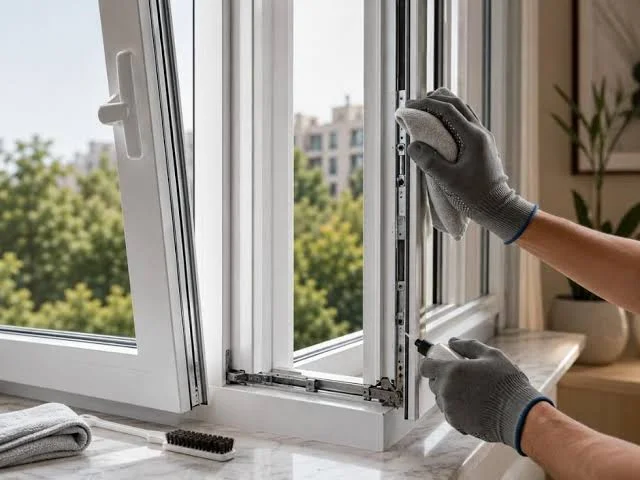
uPVC is easy to care for, but simple maintenance still matters. Regular cleaning and small checks help windows remain smooth, tight and attractive over time. A useful reference point is a guide to the maintenance of uPVC windows and doors, especially when several elements in the home use the same material.
The frames should be cleaned with mild soapy water. Strong solvents, abrasive cleaners and rough brushes should be avoided. Regular cleaning removes pollen, dirt, algae and pollution before it builds up.
The seals should be kept clean and flexible. Dirt can prevent the window from closing tightly. Damaged or compressed seals can reduce comfort and create draughts.
The tilt-and-turn mechanism should also be checked. Hinges, locking points and moving parts may need lubrication according to the manufacturer’s instructions. The handle should move easily, and the sash should shift between positions without resistance.
Drainage openings should be kept clear. uPVC windows may include small channels that allow water to escape. If these become blocked, water can collect in the wrong place.
A simple maintenance routine can include:
- Cleaning frames and glass several times a year
- Checking seals for dirt or damage
- Clearing drainage openings
- Lubricating moving hardware when needed
- Having the window adjusted if it starts to bind
These tasks are not complicated, but they help preserve the window’s function and lifespan.
Measuring and installing correctly
Accurate measurement is essential when replacing windows. The opening should be measured in several places because older walls are not always straight. Measure the width at the top, middle and bottom. Measure the height on both sides and preferably in the middle.
It is important to understand the difference between the wall opening and the external frame size. The frame must be smaller than the opening so there is space for adjustment, fixing, insulation and sealing.
Installation affects everything: insulation, ventilation, security and daily operation. The frame must be level, square and securely fixed. If the frame is twisted, the tilt-and-turn function may not work correctly.
The joint around the frame should be insulated and sealed properly. Outside, the sealing should protect against rain and wind. Inside, it should help prevent warm, moist air from entering the construction.
After installation, the window should be tested in every position. It should tilt smoothly, open fully, close tightly and lock without force. Any adjustment should be made early.
A carefully measured and correctly installed window will work better, last longer and provide a higher level of comfort.
A window type designed for real daily use
Tilt-and-turn uPVC windows are practical because they make everyday life easier. They provide controlled ventilation, simple cleaning, low maintenance and good flexibility in many different rooms.
They are especially useful in homes where comfort and convenience matter. Bedrooms need fresh air. Kitchens need quick ventilation. Bathrooms need moisture control. Home offices need a pleasant indoor climate. Summer houses need low-maintenance solutions that work after periods without use.
The best result comes from choosing windows that match the house, the room and the daily routine. Think about light, privacy, ventilation, insulation, cleaning access and the appearance of the façade.
When chosen and installed correctly, tilt-and-turn uPVC windows become a quiet improvement to the home. They do not demand much attention, but they make rooms fresher, brighter and easier to live in.