


Have you ever opened your washing machine and caught a weird, musty smell? You are not alone. Most homes deal with this at some point. The good news is that you do not need fancy store-bought products to fix it. A DIY washing machine cleaner made from things in your kitchen can clean your machine just as well, sometimes even better.
I learned this the hard way a few years ago. My washer started smelling like wet socks left in a gym bag. I tried scented sprays and dryer sheets, but nothing worked. Once I started deep cleaning with simple homemade ingredients, the smell vanished and stayed away. This article shares everything I learned, in plain and friendly language anyone can follow.
By the end of this guide, you will know why washers get smelly, how to make your own cleaner, and how to keep your machine fresh for the long run. Let’s get started.
Why Does Your Washing Machine Start to Smell Bad?
Washing machines get dirty even though their whole job is to clean things. That sounds strange, but it makes sense once you think about it. Every wash leaves behind tiny bits of soap, fabric softener, lint, and dirt. These leftovers build up in hidden spots like the rubber seal, detergent drawer, and drum.
Over time, this buildup becomes a perfect home for mold and bacteria. Mold loves dark, damp places, and a closed washing machine is exactly that. This is why front-load washers often smell worse than top-load ones. Their rubber door seal traps moisture and grime after every cycle.
A homemade washing machine cleaner attacks this problem at the source. It breaks down soap scum, kills mold, and removes bacteria naturally. Knowing the cause helps you understand why regular cleaning matters so much, not just once, but as a habit you keep up month after month.
The Best DIY Washing Machine Cleaner Recipe You Can Make Today
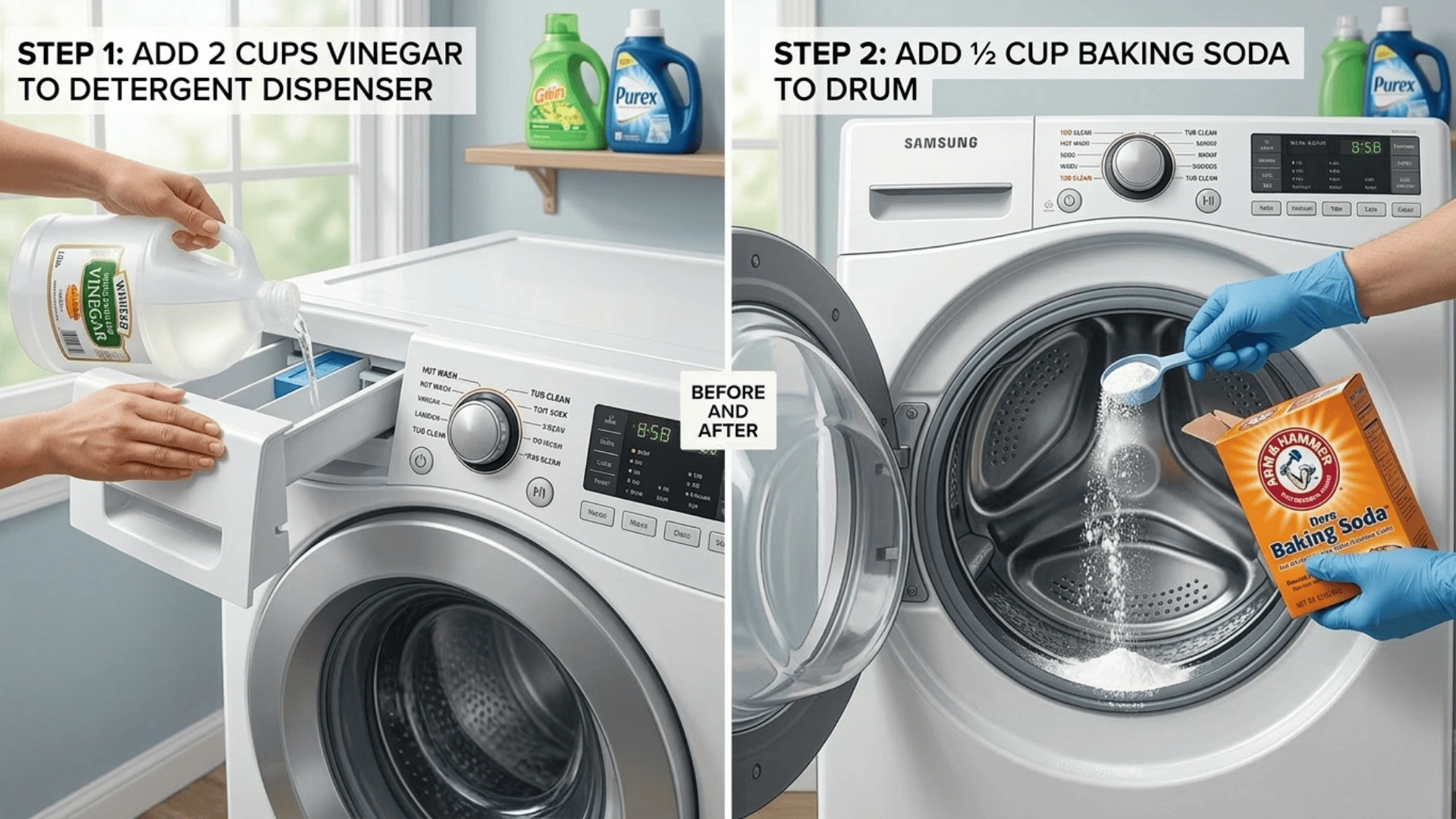
This is the recipe I trust the most, and it uses only two ingredients. You need one cup of white vinegar and half a cup of baking soda. Both are cheap, safe, and probably already sitting in your pantry right now.
Start by pouring the white vinegar straight into the detergent dispenser drawer. Then sprinkle the baking soda directly inside the empty drum. Run the washer on its hottest setting using the longest cycle available. No clothes should be inside during this wash, since this round is just for cleaning the machine itself.
The vinegar dissolves soap buildup and kills mold spores as the water heats up. Baking soda scrubs away grime and helps remove smells, since it absorbs odors naturally. Together, this DIY washing machine cleaner combo breaks down months of hidden buildup in one single cycle. It is gentle, affordable, and works on both front-load and top-load machines.
Table: Ingredients for a Natural Washing Machine Cleaner
| Ingredient | Amount Needed | What It Does |
|---|---|---|
| White vinegar | 1 cup | Breaks down soap and kills mold |
| Baking soda | 1/2 cup | Removes odors and scrubs grime |
| Hot water | Use hottest cycle setting | Helps dissolve buildup faster |
| Microfiber cloth | 1-2 cloths | Wipes seals and hidden corners |
| Old toothbrush | 1 brush | Scrubs small gaps and crevices |
This simple table shows exactly what you need before you start your DIY washing machine cleaner session. Notice that nothing here is expensive or hard to find. You likely already own most of these items. Having everything ready before you begin saves time and keeps the whole process stress-free.
How to Deep Clean the Rubber Door Seal on Front-Load Washers
The rubber seal, also called a gasket, is the dirtiest part of most front-load washers. It folds inward, creating little pockets where water and lint get trapped. This is usually where that musty smell comes from, even after running a normal wash cycle.
To clean it properly, pull back the rubber gasket gently with your hand. You will likely find gunk, hair, coins, and even mold hiding inside the folds. Wipe this area using a cloth dipped in equal parts vinegar and warm water. For tougher grime, dip an old toothbrush into baking soda paste and scrub the folds carefully.
Take your time here, since rushing means missing spots. After scrubbing, wipe the entire seal dry with a clean towel. Leaving moisture behind defeats the purpose of cleaning, since dampness invites mold right back. I clean my gasket every single week now, and my washer has not smelled musty since I started this small habit.
Cleaning the Detergent Drawer Without Any Harsh Chemicals
Many people forget about the detergent drawer when cleaning their washing machine. This drawer holds soap, fabric softener, and sometimes bleach. Over time, these products dry up and turn into a sticky, smelly paste stuck to the plastic.
Pull the drawer completely out of the machine; most slide out easily with a firm tug. Soak it in a sink filled with warm water and a few tablespoons of vinegar for about fifteen minutes. This soaking time loosens dried soap so it wipes away without much scrubbing at all.
Use an old toothbrush to clean small corners and tight grooves inside the drawer. Rinse everything thoroughly under running water before placing it back. Dry the drawer fully using a towel, since dampness left behind starts the smelly cycle all over again. Doing this monthly keeps your detergent drawer looking and smelling brand new.
Table: How Often Should You Clean Each Washing Machine Part?
| Washing Machine Part | Cleaning Frequency | Best Cleaner to Use |
|---|---|---|
| Rubber door seal | Once a week | Vinegar and water mix |
| Detergent drawer | Once a month | Vinegar soak |
| Drum (inside) | Once a month | Vinegar and baking soda |
| Filter | Every 1-2 months | Warm water rinse |
| Exterior surface | Once a week | Mild soap and cloth |
This schedule keeps every part of your machine fresh without overwhelming your routine. You do not need to clean everything daily. Spreading tasks across the week and month makes the job feel light instead of like a huge chore waiting to happen.
What About the Washing Machine Filter? Here’s Why It Matters
Most washing machines have a small filter near the bottom front panel. This filter catches coins, hair, lint, and other debris before they damage the pump. Many people never clean this part, which is honestly one of the biggest mistakes homeowners make when running their DIY washing machine cleaner routine.
Place a shallow towel or tray under the filter area before opening it, since trapped water often spills out. Twist the filter cap counterclockwise to remove it, then pull the filter out fully. You might be shocked by what falls out, from buttons to bits of tissue paper.
Rinse the filter under warm running water until it looks completely clean. Check the rubber gasket around the filter opening too, since grime collects there as well. Screw the filter back in firmly to prevent leaks during your next wash. A clean filter helps your homemade cleaning routine work even better, since trapped debris cannot interfere with proper draining.
Using Lemon as a Natural Booster for Extra Freshness
Lemons are not just for lemonade. Their natural acid works wonders for cutting through grease and neutralizing bad smells. Adding lemon to your cleaning routine boosts the power of vinegar and baking soda even further.
Cut one whole lemon into quarters and toss the pieces directly into the empty drum. Add your usual vinegar and baking soda mixture, then run the hottest cycle your machine offers. The citrus oils released during the wash leave behind a light, fresh scent that lingers for days afterward.
Some people worry lemon juice might damage rubber parts, but a single quarter lemon used occasionally is completely safe. I do this once every two months as a special boost between my regular DIY washing machine cleaner sessions. It is a small extra step that makes a noticeable difference, especially right after deep cleaning the seal and drawer.
How to Stop Mold From Coming Back After Cleaning
Cleaning your washer once will not keep mold away forever. Mold returns quickly if moisture sticks around inside the machine. Preventing its return matters just as much as the initial cleaning itself, maybe even more.
After every wash, leave the washing machine door open for at least one hour. This lets trapped moisture escape instead of sitting inside the drum overnight. Closed doors trap humidity, which is exactly what mold needs to grow back stronger than before.
Also, avoid leaving wet clothes sitting inside the drum after a cycle ends. Wet fabric against a wet drum creates a perfect breeding ground for mold spores. Transfer laundry to the dryer or line as soon as the cycle finishes. These two small habits, paired with your DIY washing machine cleaner routine, keep mold from ever becoming a problem again.
Should You Use Less Detergent? Yes, Here’s Why
Using too much detergent feels like it should clean clothes better, but it actually causes more buildup. Extra soap does not always rinse away completely, especially in high-efficiency washers designed for smaller amounts.
Check your detergent bottle for the actual recommended amount, since most people pour in far more than needed. High-efficiency washers usually require even less soap than older standard machines. Leftover soap residue sticks to the drum walls and rubber seal, creating the exact grime your homemade cleaner has to fight later.
Switching to the correct detergent amount reduces how often deep cleaning becomes necessary. I cut my detergent use by almost half last year and noticed less residue immediately. My washer now needs less scrubbing during each DIY washing machine cleaner session. Small changes like this work together with cleaning routines to keep your machine fresher for longer stretches of time.
Recognizing the Warning Signs Before Smells Get Worse
A musty smell from clean clothes usually means mold or bacteria have built up inside your machine. Black spots on the rubber seal point to mold growth that needs immediate attention with a deep clean. Slow draining often signals a clogged filter, while white residue in the detergent drawer means dried soap has piled up over time.
Catching these signs early saves you from bigger headaches down the road. A machine ignored for too long may develop smells that linger even after several rounds of cleaning. The moment you notice any of these clues, it is time to run your DIY washing machine cleaner cycle again, rather than waiting for the next scheduled cleaning day.
Is Bleach Better Than a DIY Washing Machine Cleaner?
Many people assume bleach is the strongest option for cleaning a washing machine. Bleach does kill mold and bacteria effectively, that part is true. However, it comes with downsides that vinegar and baking soda simply do not have.
Bleach produces strong fumes that can irritate your eyes, throat, and lungs during use. It can also damage rubber seals over time with repeated exposure, leading to costly repairs. Mixing bleach with other cleaning products accidentally can create dangerous gases, which makes it riskier to use casually at home.
A DIY washing machine cleaner using vinegar and baking soda avoids these risks completely. It is gentle on rubber parts, safe to breathe around, and just as effective at killing odor-causing bacteria. I switched away from bleach years ago and have never looked back, since my natural routine works wonderfully without any safety worries.
Quick Maintenance Habits That Keep Your Washer Smelling Great
Building small habits into your laundry routine prevents most odor problems before they start. These habits take only a few extra seconds but make a huge difference over weeks and months of regular washing machine use.
Wipe down the door seal with a dry cloth after every single wash cycle finishes. Leave the detergent drawer slightly open so it can air out between loads. Run an empty hot water cycle once a month, even without adding any cleaner at all. These tiny actions reduce moisture buildup, which is the root cause behind almost every bad smell.
Combine these daily habits with your monthly DIY washing machine cleaner routine for the best results. Think of it like brushing your teeth versus visiting the dentist. Daily care prevents small problems, while deeper cleaning handles anything daily habits miss. Together, they keep your washer running fresh for years without needing professional repair services.
Final Thoughts: Keep Your Washer Fresh the Natural Way
Cleaning your washing machine does not require expensive products or complicated steps. A simple DIY washing machine cleaner made from vinegar and baking soda handles the job beautifully, and it is safer than harsh chemicals too. Pair that with regular habits like wiping the seal and airing out the drawer, and bad smells become a thing of the past.
I know firsthand how frustrating a smelly washer feels, especially when freshly washed clothes come out smelling worse than before. The fixes shared here are exactly what worked for my own home, and they have stayed effective for years now.
Try this cleaning routine today, even if it is just the basic vinegar and baking soda cycle. Your clothes, your nose, and your washing machine will thank you. If this guide helped you, share it with a friend who might be dealing with the same smelly washer problem.
Frequently Asked Questions About DIY Washing Machine Cleaners
1. How often should I use a DIY washing machine cleaner?
Most washing machines benefit from a deep cleaning once a month. If you wash heavily soiled clothes often, consider cleaning every two to three weeks instead. Regular small habits, like wiping the seal weekly, reduce how often deep cleaning becomes necessary.
2. Can I use apple cider vinegar instead of white vinegar?
Yes, apple cider vinegar works similarly since it contains the same acetic acid found in white vinegar. However, white vinegar is cheaper and has no color, which means it will not stain rubber seals or plastic parts inside your machine.
3. Is it safe to mix vinegar and baking soda together at the same time?
Yes, it is safe, though they will fizz briefly when combined directly. For best results, add vinegar to the detergent drawer and baking soda inside the drum separately. This keeps both ingredients active longer during the hot water cycle.
4. Why does my front-load washer smell worse than my old top-load one?
Front-load washers use a rubber door seal that traps moisture between cycles. This creates a damp, dark environment perfect for mold growth. Top-load washers have open tops that allow more air circulation, which reduces trapped moisture significantly.
5. Can a DIY washing machine cleaner damage my machine over time?
No, vinegar and baking soda are gentle and safe for regular use in any washing machine type. Unlike bleach, they will not corrode rubber seals or metal parts. Always avoid using excessive amounts beyond the recommended one cup of vinegar per cleaning session.
6. What should I do if the smell does not go away after cleaning?
If odor persists, check your filter for hidden debris, since clogs cause trapped water and bacteria growth. Also inspect the drain hose for buildup. Running two consecutive vinegar and baking soda cycles back to back often resolves stubborn, lingering smells completely.
