

Buying a home for the first time can feel scary. There are so many words you don’t know. There are so many steps to follow. You might wonder if you’re ready at all.
Take a deep breath. You can do this. Millions of people have learned how to buy your first home, and you can too. This guide will walk you through every step in plain, simple words. No confusing terms. No skipped steps. Just clear, honest help from start to finish.
I’ve watched friends and family go through this journey. Some made smart choices early on. Others learned hard lessons the slow way. I’m sharing what works, what to avoid, and what really matters when you’re trying to buy your first home. By the end of this article, you’ll know exactly what to do next.
What Does It Mean to Buy Your First Home?
Buying your first home means you are purchasing a house or apartment for the very first time. You are not renting anymore. You own the place. This is called being a “first-time home buyer.”
This step is exciting, but it’s also a big deal. You are using a lot of money. You are making a long-term choice. That’s why learning how to buy your first home the right way matters so much.
Many people think they need to know everything before they start. That’s not true. You just need to understand the basic steps. Once you know the steps, the process becomes much less scary. Think of it like learning to ride a bike. At first, it feels wobbly. After a few tries, it feels natural.
This guide breaks the process into small, easy pieces. Each piece builds on the last one. By the time you finish reading, you’ll have a clear path forward.
Why Buying Your First Home Is a Big Financial Decision
A home is probably the most expensive thing you will ever buy. That’s why you need to slow down and think clearly. Rushing into a purchase can lead to money trouble later.
When you buy a home, you are not just buying walls and a roof. You are buying stability. You are building something called “equity.” Equity is the part of the home you truly own, separate from what you still owe the bank.
Every month you pay your mortgage, your equity grows a little. Over time, this can become real wealth. That’s one reason so many people see homeownership as a smart long-term move.
But there’s another side too. Homes come with costs beyond the price tag. Repairs, taxes, and insurance all add up. If you don’t plan for these costs, you might feel squeezed financially. That’s why learning how to buy your first home properly protects your wallet, not just your dream.
Take your time with this decision. A home is not something to buy on impulse. It’s something to buy with a clear plan.
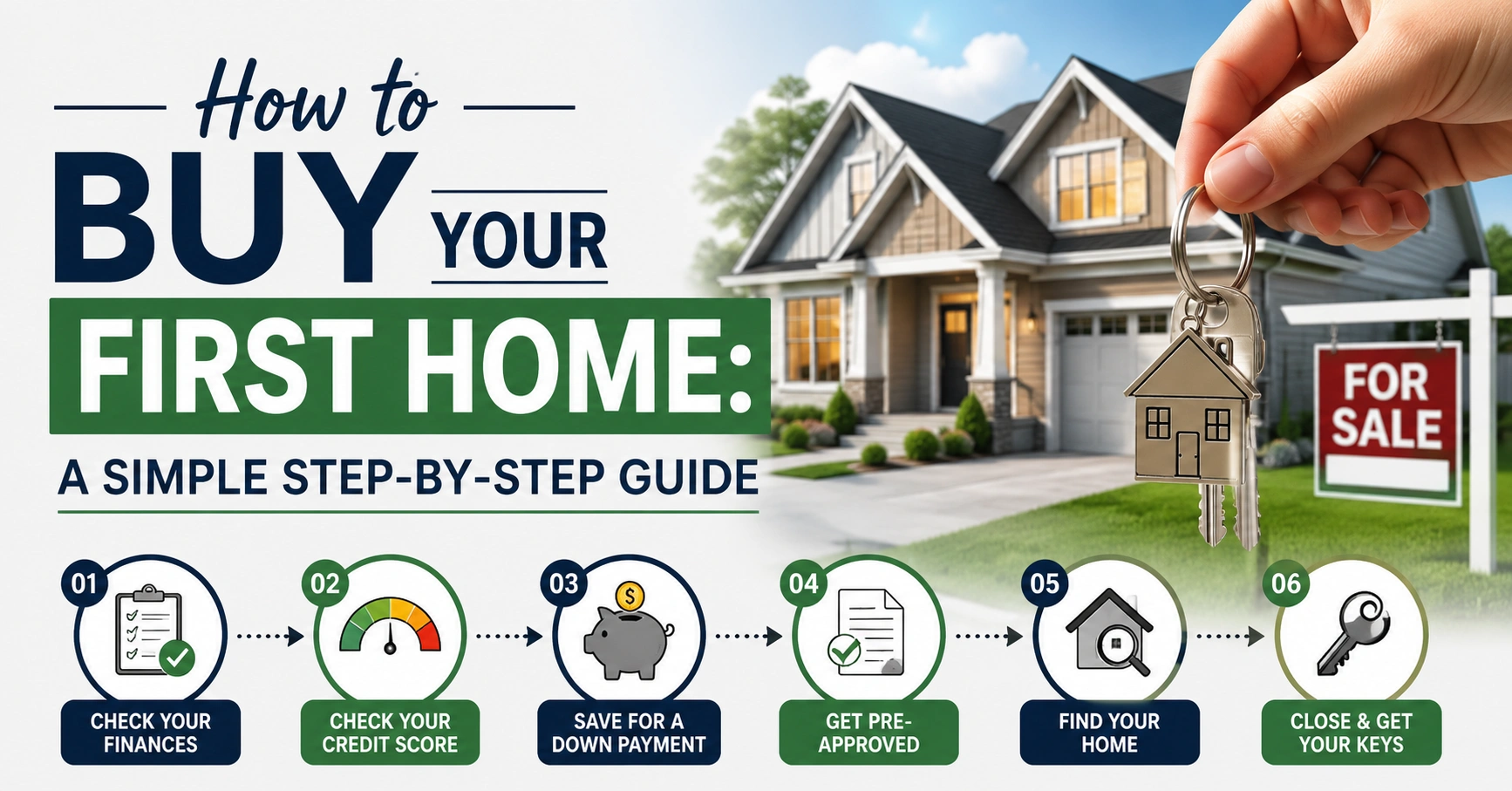
Check Your Credit Score Before You Start
Your credit score is like a report card for how you handle money. Lenders look at this number to decide if they will give you a home loan, also called a mortgage.
A higher credit score usually means a lower interest rate. A lower interest rate means you pay less money over time. Even a small difference in your score can save you thousands of dollars.
You can check your credit score for free through many banks and credit card apps. Look at your score now, even if you’re not ready to buy yet. This gives you time to fix any problems.
If your score is low, don’t panic. You can raise it by paying bills on time, paying down debt, and avoiding new credit accounts. Small steady changes work better than quick fixes. Give yourself a few months to improve your score before you apply for a mortgage. This single step can shape your entire home-buying journey.
Set a Realistic Budget for Your First Home
Before you fall in love with a house, fall in love with a number. That number is your budget. Knowing what you can truly afford keeps you safe from money stress later.
A common rule says your monthly housing cost should be less than 30 percent of your income. This includes your mortgage payment, property taxes, and insurance. It’s a helpful starting point, though your personal comfort level matters too.
Don’t forget the other costs of owning a home. Repairs, furniture, moving costs, and utility bills all add up fast. Many first-time buyers forget these “hidden” costs and feel surprised later.
Sit down and write out your full budget. List your income. List your current bills. See what’s left over. This number tells you what kind of home payment fits your life. A solid budget is one of the smartest tools when learning how to buy your first home without financial stress.
If you’re searching for tips on how to buy your first home on a tight income, this step matters most. A realistic budget keeps your search grounded in reality instead of wishful thinking.
Save for Your Down Payment
A down payment is the money you pay upfront when buying a home. It’s a percentage of the total home price. The rest comes from your mortgage loan.
Many people believe you need 20 percent down to buy a home. That’s actually a myth. Many loan programs allow much smaller down payments, sometimes as low as 3 percent. This makes homeownership possible for more people than you might think.
Still, saving more money upfront has real benefits. A bigger down payment means a smaller loan. A smaller loan means lower monthly payments. It can also help you avoid extra fees like private mortgage insurance.
Start a separate savings account just for your down payment. Set up automatic transfers each month, even small ones. Watching that number grow can feel motivating. Some buyers also receive down payment help from family, local programs, or first-time buyer grants. It’s worth researching what’s available in your area before you give up on saving enough.
This is often the slowest part of learning how to buy your first home, but it’s also the most rewarding. Every dollar saved brings you closer to your own front door.
Get Pre-Approved for a Mortgage
Mortgage pre-approval is a letter from a lender. It says how much money they are willing to lend you. This step happens before you start house hunting, not after.
Getting pre-approved tells you your real budget. It also shows sellers that you’re a serious buyer. In a competitive market, sellers often choose buyers who already have pre-approval letters in hand.
To get pre-approved, you’ll share documents like pay stubs, tax returns, and bank statements. The lender reviews your income, debt, and credit score. This step might feel like a lot of paperwork, but it’s worth the effort.
Try getting pre-approved by more than one lender. Interest rates and terms can vary, sometimes by a lot. Comparing offers could save you real money over the life of your loan. This step is one of the most important parts of learning how to buy your first home with confidence.
Find a Trustworthy Real Estate Agent
A good real estate agent acts like your guide through this whole journey. They know the local market. They understand paperwork. They can spot red flags you might miss.
For first-time buyers, a skilled agent is often worth their weight in gold. They negotiate on your behalf. They help schedule showings. They explain confusing terms in normal language. Most importantly, they work for you, the buyer, often at no direct cost to you.
When choosing an agent, ask friends and family for recommendations. Read online reviews. Interview a few agents before deciding. Ask how long they’ve worked in your area. Ask how they communicate, whether by text, call, or email.
A strong agent-client relationship is built on trust and clear communication. If something feels off during your first conversation, keep looking. You deserve someone who listens closely and explains things patiently, especially since this is your first time buying a home.
The right agent can make the entire experience of how to buy your first home feel far less overwhelming.
Start House Hunting With a Clear Plan
Now comes the fun part: looking at homes. But don’t just wander aimlessly. Walk into this stage with a clear list of needs and wants.
Make two lists. One list holds your “must-haves,” like number of bedrooms or distance from work. The other list holds your “nice-to-haves,” like a big backyard or updated kitchen. This helps you stay focused when emotions run high.
Visit homes in person whenever possible. Photos online can hide problems. Walk through slowly. Check water pressure. Open closets. Look at the ceiling for water stains. Trust your eyes and your gut feeling.
Keep a simple notebook or spreadsheet for each home you visit. Write down what you liked and disliked. After visiting several homes, these notes help you remember details and compare options fairly. House hunting takes patience, but staying organized makes the search much smoother.
This stage often takes the longest when learning how to buy your first home, so give yourself grace if it stretches on for weeks.
Make a Smart, Competitive Offer
Once you find “the one,” it’s time to make an offer. This is where your real estate agent becomes especially helpful. They’ll look at similar homes nearby to suggest a fair offer price.
Your offer includes more than just price. It includes things like your financing details, your proposed closing date, and any conditions called “contingencies.” Common contingencies include a home inspection or a financing approval.
In a hot market, you might face competition from other buyers. Don’t let fear push you into overpaying. Stick to your budget. A good agent helps you stay calm and strategic, even when emotions run high.
Sometimes sellers counter your offer with a different price or terms. This is completely normal. Negotiation is simply part of buying a home. Stay patient, stay polite, and remember your bigger goal: finding a home that fits your life and your budget.
Schedule a Home Inspection
A home inspection is one of the most important safety nets in this entire process. A licensed inspector checks the home from top to bottom, looking for hidden problems.
They examine the roof, foundation, plumbing, electrical systems, and more. Afterward, you’ll receive a detailed report explaining what they found. This report can reveal issues you’d never spot on your own.
If the inspection uncovers serious problems, you have options. You might ask the seller to fix the issue. You might ask for a price reduction. In some cases, you might decide to walk away entirely.
Never skip this step, even if the house looks perfect. Some problems, like faulty wiring or a cracked foundation, hide beneath the surface. Spending a few hundred dollars on inspection can save you thousands later. This is one part of how to buy your first home safely, not just quickly.
Understand Closing Costs Before Signing
Closing costs are fees you pay when finalizing your home purchase. Many first-time buyers forget about these costs and feel shocked when the bill arrives.
These costs typically include loan fees, appraisal fees, title insurance, and attorney fees. They usually add up to around 2 to 5 percent of the home’s purchase price. On a $300,000 home, that could mean $6,000 to $15,000 extra.
Ask your lender for a detailed estimate early in the process. This document, sometimes called a “Loan Estimate,” breaks down every expected fee. Reading it carefully helps you avoid surprises later.
Some costs are negotiable. In certain cases, sellers agree to cover part of the closing costs, especially in slower markets. It never hurts to ask your agent whether this is realistic in your situation. Planning ahead for these costs keeps your moving day stress-free instead of financially painful.
Budgeting for closing costs early is a step many guides on how to buy your first home skip over, yet it’s one of the most important pieces of the whole puzzle.
Get a Final Walkthrough Before Closing Day
Right before closing, you’ll do one more walkthrough of the home. This isn’t optional, even though it sometimes gets overlooked by tired, excited buyers.
During this visit, you confirm the home is in the same condition as when you made your offer. You check that agreed-upon repairs were actually completed. You make sure nothing has been damaged since your last visit.
Bring your inspection report with you. Compare it to what you see. If the seller promised to fix a leaky faucet, check that faucet. If they promised a working oven, turn it on.
This step protects you from last-minute surprises. It’s your final chance to catch a problem before everything becomes official. Don’t skip this walkthrough, even if you’re excited and ready to sign papers.
Closing Day and Signing the Paperwork
Closing day is the finish line. This is when ownership officially transfers to you. It can feel overwhelming, with stacks of paper waiting for your signature.
You’ll review and sign your mortgage documents, the deed, and other legal forms. Take your time reading each page. Ask questions if anything feels unclear. This is your right as a buyer, and a good closing agent will welcome your questions.
You’ll also pay your remaining closing costs and down payment at this time, usually through a wire transfer or cashier’s check. Bring proper identification, as required by your closing company.
Once everything is signed, you’ll receive the keys. That’s it. You officially know how to buy your first home, because you just did it. This moment often feels both exciting and a little surreal, even for buyers who planned carefully.
Common Mistakes First-Time Home Buyers Should Avoid
Even careful buyers sometimes stumble. Knowing common mistakes ahead of time helps you avoid them entirely.
One frequent mistake is shopping for homes before checking your budget. This leads to disappointment when reality doesn’t match your dream price range. Another mistake is skipping mortgage pre-approval, which weakens your offer in competitive markets.
Buyers also sometimes max out their budget completely, leaving no room for emergencies. A home with no financial cushion can become stressful fast. It’s wise to keep some savings untouched after your purchase.
Skipping the home inspection is another costly error. So is making large purchases, like a new car, right before closing, since this can hurt your credit and threaten your loan approval. Staying informed and patient throughout the process helps you sidestep these common pitfalls completely.
Avoiding these mistakes is just as important as following the right steps when you’re figuring out how to buy your first home successfully.
Tips to Make Your First Home Purchase Smoother
A few simple habits can make this whole journey feel less stressful. First, stay organized. Keep all your documents, like pay stubs and bank statements, in one folder, digital or physical.
Second, communicate openly with your agent and lender. Don’t hide financial concerns or hesitations. The more honest you are, the better they can help you.
Third, be patient with yourself. This process usually takes weeks or months, not days. Rushing rarely leads to good decisions. Give yourself permission to slow down when needed.
Fourth, ask questions whenever something feels confusing. There are no silly questions when this much money and commitment is involved. A good professional will always welcome your curiosity rather than judge it.
Finally, remember why you started this journey. Whether it’s stability, space, or building wealth, your reason matters. Hold onto that reason on stressful days, because it’ll remind you the effort is worth it.
Frequently Asked Questions About Buying Your First Home
1. How much money do I need to buy my first home?
This depends on the home’s price and your loan type. Many buyers put down between 3 and 20 percent. You’ll also need money for closing costs, which usually total 2 to 5 percent of the home price.
2. What credit score do I need to buy a house?
Many loan programs accept scores as low as 580, though higher scores get better interest rates. Aim for 670 or higher if possible, since this often unlocks more loan options and lower costs.
3. How long does it take to buy a first home?
The entire process, from house hunting to closing, often takes two to six months. Mortgage pre-approval can speed things up, while a slow housing search can stretch the timeline longer.
4. Do I need a real estate agent to buy a home?
You’re not legally required to use one, but it’s highly recommended for first-time buyers. Agents help you avoid costly mistakes and often don’t cost the buyer anything directly.
5. What’s the difference between pre-qualification and pre-approval?
Pre-qualification is a quick estimate based on basic information you provide. Pre-approval is more official, based on verified documents, and carries more weight when making an offer.
6. Can I buy a home with bad credit?
It’s possible, though it may mean higher interest rates or a larger down payment. Some loan programs, like FHA loans, are designed to help buyers with lower credit scores become homeowners.
Final Thoughts: You’re Ready to Start Your Home-Buying Journey
Learning how to buy your first home doesn’t have to feel overwhelming anymore. You now understand the full process, from checking your credit score to receiving your keys on closing day.
Every successful homeowner once stood exactly where you’re standing now. Unsure. A little nervous. Hopeful. They took it one step at a time, just like you’re about to do. Mistakes happen, but they’re rarely permanent setbacks if you stay informed and patient.
Start small today. Check your credit score. Write out a simple budget. Talk to a lender about pre-approval. Each small action moves you closer to holding your own front door key.
If you found this guide helpful, share it with a friend who’s also dreaming of homeownership. And if you have questions along the way, don’t hesitate to reach out to a trusted lender or real estate agent. Your first home is closer than you think. Now go take that next step.
