


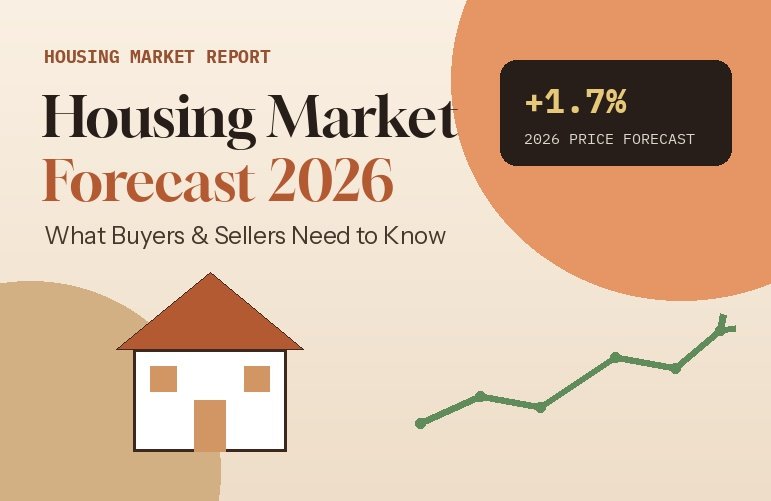
Are you trying to make sense of today’s housing market? You are not alone. Millions of people are asking the same question right now. They want to know if this is a good time to buy a home. They want to know if prices will drop. And they want a clear, honest housing market forecast they can actually trust.
This guide breaks it all down in plain, simple language. No confusing jargon. No scary headlines just to get clicks. Just a real housing market forecast built from real numbers, real trends, and real talk about where the housing market 2026 is headed.
We will look at mortgage rates, home prices, inventory, and the big question everyone keeps asking: will the housing market crash? By the end, you will feel much more confident about your next move, whether that means buying, selling, or simply waiting it out.
Housing Market Forecast: Where the Market Stands Right Now
Let’s start with the facts on the ground today. As of early August 2026, the average 30-year fixed mortgage rate sits around 6.65%, based on <cite index=”16-1″>the current average rate on a 30-year jumbo loan sitting at 6.894%, barely changed from the prior day</cite>. Rates have been bouncing between roughly 6.4% and 6.9% for weeks now, moving up and down with the news cycle.
Part of that movement comes from world events. <cite index=”11-1″>Interest rates on home loans have risen since the war in Iran began in late February, and the conflict pushed oil prices up</cite>. Higher oil prices tend to push inflation higher too. And when inflation rises, mortgage rates usually follow.
The good news is that most experts do not expect wild swings from here. <cite index=”17-1″>Most experts project 30-year mortgage rates will hold between 6.4% and 6.5% for the rest of the year</cite>. That means the days of surprise rate spikes may be behind us, at least for now. This kind of stability actually helps buyers and sellers plan ahead with more confidence, and it is one of the calmer signs in this year’s housing market forecast.
Housing Market Predictions 2026: What the Experts Say
Every major housing group has weighed in with their own version of the housing market forecast, often called housing market predictions 2026, and their numbers vary. That is normal. Forecasting the economy is never an exact science. But when several experts land in the same general range, it gives us a much clearer picture.
Here is a simple table comparing what the top forecasters expect for home prices this year.
| Source | 2026 Home Price Forecast | Notes |
|---|---|---|
| Realtor.com | +1.7% increase | Modest, steady growth |
| Zillow | +1.2% increase | Fewer markets seeing price drops |
| Redfin | Around +3% sales growth | Slightly more bullish view |
| National Association of Realtors | +14% in existing home sales | Most optimistic forecast |
| HouseCanary | +3% national price growth | Strongest gains in Midwest, New England |
As you can see, this housing market forecast does not include a crash from any major source. Instead, most experts describe 2026 as a year of slow, steady healing after a rough stretch in 2025. <cite index=”7-1″>The 2025 housing market sank to 30-year lows, so even a modestly improving forecast counts as welcome news</cite>.
Housing Market Forecast: Will It Crash in 2026?
This is the question on everyone’s mind. Let’s answer it directly: no, most experts do not believe a crash is coming. <cite index=”5-1″>Despite ongoing concerns, a full-scale housing market crash at the start of 2026 is highly unlikely</cite>.
Why not? A real crash usually needs two things. First, way too many homes for sale. Second, people forced to sell fast, often through foreclosures. Neither of those problems exists right now. <cite index=”5-1″>Inventory remains limited compared to historical norms, and demand stays supported by demographic shifts like millennial homebuyers</cite>.
There is another reason a crash seems unlikely. Most current homeowners locked in super low mortgage rates a few years ago. <cite index=”6-1″>Almost 60% of borrowers have mortgage rates at least two percentage points below today’s market rates</cite>. That means these owners have little reason to sell. They would rather stay put than trade a cheap rate for an expensive one. Fewer sellers means fewer desperate price cuts, which means less risk of a crash.
So while prices might dip slightly in some cities, a nationwide collapse looks very unlikely based on current data. The housing market crash fear that dominates social media headlines just does not match what the real numbers show.
Are House Prices Going Down Anywhere?
Here is the honest answer: it depends on where you live. Nationally, prices are still inching upward, not falling. But some local markets tell a different story.
<cite index=”3-1″>The number of major markets seeing annual price declines is expected to fall from 24 markets in October to just 12 next year</cite>. That is actually good news. It means fewer places are seeing price drops than before, not more.
So if you are asking “are house prices going down” in your specific city, the answer really depends on local supply and demand. Places with lots of new construction, like parts of Texas and Florida, may see softer prices. Meanwhile, tighter markets in the Northeast and Midwest tend to hold their value better.
If you want a real answer for your area, check local listing data instead of national headlines. A national trend rarely tells the full story for your specific zip code. Real estate really is local, even when national news makes it sound like one big story.
Will House Prices Ever Go Down Nationwide?
People often ask “will house prices go down” as if it is a simple yes or no question. In reality, prices move in cycles. They rise for a while, level off, then sometimes dip a little before rising again.
Right now, most forecasts point to slow, modest growth rather than a steep drop. But that does not mean prices will never soften. If mortgage rates spike sharply, or if the job market weakens a lot, prices could cool off in certain regions.
Still, a nationwide price collapse remains unlikely without a major economic shock. Builders are being cautious. <cite index=”4-1″>Builders have limited incentive to keep building at the same pace in 2026, because of high construction costs and a stagnant labor market</cite>. Less new construction means less oversupply, and less oversupply means fewer big price drops.
So will prices ever go down everywhere at once? It is possible during a recession. But based on today’s data, that scenario looks unlikely anytime soon.
Mortgage Rates: The Real Story Behind the Housing Market Forecast
Mortgage rates control almost everything in real estate. When rates rise, monthly payments get bigger, so fewer people can afford to buy. When rates fall, more buyers jump back into the market.
Right now, rates are stuck in a fairly narrow range. <cite index=”8-1″>The average 30-year fixed rate sat at 6.64% on August 4, 2026, barely changed from the day before</cite>. That kind of stability, even if the number feels high, is actually helpful. It lets buyers plan their budgets without constant surprises.
Looking ahead, forecasters expect only small moves either way. <cite index=”13-1″>Fannie Mae and the Mortgage Bankers Association predict rates will likely settle between 6.2% and 6.5% for the rest of 2026</cite>. That is not the ultra-low rates we saw a few years ago. But it is also nowhere near the scary 8% levels some feared.
Watch the economic calendar too. <cite index=”14-1″>Jobs reports and inflation data, along with any Federal Reserve tone shifts, can move rates faster than anything else</cite>. Keeping an eye on those dates can help you time your rate lock more wisely.
US Housing Market News Today: The Big Themes
If you search us housing market news today, you will notice a few repeating themes. Let’s break down the three biggest ones.
First, affordability is slowly improving. Prices are rising more slowly than wages in many areas, which helps buyers catch up over time. Second, inventory is growing, giving buyers more choices than they had a year or two ago. Third, sellers are becoming more realistic about pricing, since homes are sitting on the market longer than before.
Together, these three trends point toward a more balanced market, and they form the backbone of most housing market forecast reports right now. <cite index=”4-1″>Zillow’s chief economist described the market as finally settling into a healthier state, with buyers gaining more inventory and affordability while sellers see price stability</cite>. That balance benefits almost everyone involved, not just one side of the transaction.
Of course, national news is just a starting point. Always check your specific state and city before making a big decision, since conditions vary a lot from coast to coast.
Home Prices News: A Closer Look at Regional Trends
Not every part of the country moves the same way. <cite index=”5-1″>National price growth is expected to land around 3% year-over-year, with the strongest gains happening in the Midwest and New England</cite>.
Meanwhile, some Sun Belt states are seeing more new construction, which softens price growth there. <cite index=”5-1″>Florida currently tops the list of states with the highest expected listing activity for early 2026</cite>. More listings usually mean more competition among sellers, which can slow price gains.
Here is a simple table showing regional trends worth watching this year.
| Region | Trend | What It Means for You |
|---|---|---|
| Midwest | Stronger price growth | Good area for long-term appreciation |
| New England | Stronger price growth | Limited supply keeps prices firm |
| Florida | High new listings | More buyer choice, softer price growth |
| Sun Belt states | More new construction | Potential deals for buyers |
| Coastal cities | Higher costs, slower growth | Migration toward affordable metros |
This regional home prices news matters because it shows real estate is never one single story. It is really fifty different stories happening at once, one for each state.
Inventory: Why More Homes for Sale Is Good News
For years, buyers struggled because there just were not enough homes for sale. That is finally starting to change, even if slowly. <cite index=”2-1″>Realtor.com forecasts an 8.9% increase in homes for sale this year, though inventory will likely still sit about 12% below pre-2020 levels</cite>.
Why does this matter to you? More inventory means less competition. It means fewer bidding wars. And it often means sellers become more willing to negotiate on price or offer to help with closing costs.
Builders are also stepping up in creative ways. <cite index=”4-1″>Builder incentives, like interest rate buydowns, are expected to become more common, especially in areas where affordability remains tight</cite>. A rate buydown can lower your monthly payment significantly, sometimes for the entire life of the loan.
If you have been holding off because you could not find the right home, this year should bring more options. It will not feel like a flood of listings, but it is a real and steady improvement worth paying attention to.
Are Home Prices Dropping in Any Major Cities?
Some buyers specifically want to know: are home prices dropping in big cities right now? A handful of markets are indeed cooling, especially those that saw huge price jumps during the pandemic years.
Cities with a lot of new apartment and condo construction tend to see softer prices, since more supply naturally slows down price growth. Meanwhile, cities with strict building rules and limited land tend to hold their value much better.
If you are shopping in a specific city, do not rely on national averages alone. Look up local median sale prices, price cuts, and days-on-market data. Real estate agents and county records both offer this kind of local detail for free.
Remember, even in a slowing city, prices dropping does not always mean a crash. It often just means the market is returning to a more normal, sustainable pace after a period of overheated growth.
Rent vs. Buy: How the Real Estate Market Affects Renters Too
The real estate market is not just about buying and selling. It also affects renters in a big way. Good news here too: rent growth is expected to slow down significantly this year.
<cite index=”3-1″>Multifamily rents are forecast to rise just 0.3% in 2026, a very small increase compared to recent years</cite>. That gives renters a bit more breathing room to save up for a future down payment.
This matters a lot for first-time buyers. When rent eats up less of your paycheck, you can save faster for that home down payment. It creates a positive cycle, slower rent growth today can lead to more buyers entering the market in the next year or two.
If you are currently renting and dreaming of owning, this slower rent growth is genuinely good news. Use the extra breathing room to build your savings and improve your credit score while you wait for the right opportunity.
Tips for Buyers Navigating This Market
Buying a home in any market can feel overwhelming, but a few smart habits make a big difference. Here is a simple table with practical tips for today’s conditions.
| Buyer Tip | Why It Helps |
|---|---|
| Shop multiple lenders | Rates can vary widely between lenders |
| Ask about rate buydowns | Builders often offer them on new homes |
| Get pre-approved early | Shows sellers you are serious and ready |
| Check state housing programs | Many offer below-market rates and grants |
| Do not wait for perfect timing | Nobody can predict the exact bottom |
One tip deserves extra attention. <cite index=”14-1″>State housing finance agencies often offer rates 0.25% to 0.75% below market, plus down payment assistance grants, with income limits sometimes reaching $120,000 or higher</cite>. Many buyers never even check if they qualify. Spend an hour researching your state’s program before assuming a home is out of reach.
Buying a home is a personal decision, not just a market timing game. If a home fits your budget and your life plans, waiting for a “perfect” market rarely pays off.
Tips for Sellers in Today’s Market
Sellers face a different challenge this year. With more inventory arriving, buyers have more choices than before. That means pricing correctly matters more than ever.
Start with a realistic price based on recent local sales, not last year’s peak prices. Overpricing a home almost always backfires, leading to price cuts and a stale listing. Buyers tend to notice when a home sits too long, and they wonder what is wrong with it.
Small updates can also make a big difference. Fresh paint, good lighting, and decluttering cost little but can boost buyer interest fast. Since builders are offering incentives like rate buydowns, resale sellers may need to get creative too, perhaps offering to cover some closing costs.
Patience matters this year. Homes may take a bit longer to sell compared to the frenzy of a few years ago. That is not a bad sign, it is simply a return to a more normal, balanced housing market.
What Could Change This Housing Market Forecast
No forecast is guaranteed. A few wild cards could shift the housing market forecast in either direction this year.
Inflation is one big factor to watch. If inflation cools faster than expected, mortgage rates could drop, sparking more buyer demand. If inflation stays sticky, rates could stay elevated or even climb a bit higher.
Global events matter too. <cite index=”8-1″>Recent shifts in U.S. foreign policy toward diplomacy, after previous military tension, have already influenced daily rate movements</cite>. Oil prices, in particular, tend to ripple through the entire economy fast.
Finally, the job market plays a huge role. Strong job growth supports home buying demand. A weaker job market could slow sales and soften prices in vulnerable regions. Keep an eye on monthly jobs reports, since they often move mortgage rates within days of release and can quietly reshape the entire housing market forecast.
Frequently Asked Questions
1. What does the housing market forecast say about a crash in 2026?
Most experts say a crash is very unlikely this year. Inventory remains limited, and most homeowners have low mortgage rates, so they are not being forced to sell.
2. Are house prices going down right now?
Nationally, prices are still rising slowly, not falling. Some local markets with lots of new construction may see softer prices, but a national drop is not expected.
3. What will mortgage rates be in 2026?
Most forecasts expect the 30-year fixed rate to stay between about 6.2% and 6.9% for the rest of the year, with only small movements up or down.
4. Is it a good time to buy a home?
It depends on your personal finances more than the market. If you are financially ready, with stable income and savings, waiting for a “perfect” market rarely pays off.
5. Will home prices ever go down significantly?
A sharp national drop would likely require a major economic shock, like a serious recession. Right now, most data points to slow, steady growth instead.
6. Is now a good time to sell my house?
Yes, if you price it realistically. Inventory is rising, so overpriced homes may sit longer. A fair price based on recent local sales tends to sell fastest.
Final Thoughts: Making Sense of the 2026 Housing Market
The housing market forecast for 2026 tells a story of slow healing, not sudden collapse. Mortgage rates are stabilizing. Inventory is growing. And most experts agree a crash is very unlikely this year.
That does not mean every city will act the same way. Real estate is always local, so your best move is to study your specific area rather than relying only on national headlines. Talk to a local real estate agent, check recent sales in your neighborhood, and compare a few different mortgage lenders before making any big decision.
Whether you are buying, selling, or just watching from the sidelines, staying informed is your best tool. Bookmark this page, check back for updates, and share it with a friend who is also trying to figure out this housing market. The more you understand, the more confident your next move will be.
Related posts:
- Warning Signs of Electrical Problems You Should Never Ignore
- Why You Need a Tree Risk Report Before Buying a Property With Mature Trees
- Why Scheduling Early Is the Smart Choice for Outdoor Christmas Light Installation
- Best Outdoor Kitchen Ideas for Texas Backyards
- What Sets Professional Roofing Companies In North Liberty Apart From The Rest
