



Introduction
Many homeowners focus on cleaning window glass but often forget the window screens. Even if your glass is spotless, dirty screens can make your windows look dull and reduce airflow. Dust, pollen, pollution, and grease accumulate over time and can even affect the window frame if left unattended. Homes with dark or black windows show dust more prominently, making clean screens even more important.
Whether you have a single hung window, an awning window, or a modern fixed window, knowing how to clean window screens properly can improve air circulation, reduce allergens, and enhance the overall appearance of your home. This comprehensive 2026 guide will explain the most effective ways to clean window screens using simple tools and practical methods. It will also provide deep cleaning tips for heavily soiled screens, common mistakes to avoid, and expert hacks to make maintenance easier.
Why Window Screens Get Dirty

Window screens are exposed to both indoor and outdoor elements. Over time, dust, pollen, and debris settle on the mesh, blocking airflow and reducing the amount of natural light entering your home. Screens near roads, gardens, or frequently opened windows accumulate dirt faster. Other factors that contribute to dirty screens include cooking grease, pet hair, rain splashes, and seasonal pollen.
Knowing how to clean window screens regularly prevents dust buildup, protects your window frame, and ensures your home remains bright and well-ventilated.
Benefits of Cleaning Window Screens
Cleaning window screens provides several benefits for homeowners. First, it improves airflow, allowing fresh air to circulate more freely. Clean screens also reduce indoor dust, allergens, and pollen, which is particularly beneficial for people with respiratory conditions or allergies.
Second, clean screens enhance the appearance of your home. Windows with dirty screens can look neglected even if the glass is spotless. This is especially noticeable on dark or black windows where dust is more visible.
Third, regular cleaning extends the life of your screens. Dust and debris can weaken the mesh over time, causing small tears or holes. Learning how to clean window screens correctly prevents damage to the window frame, reducing the risk of costly repairs.
Types of Window Screens

Different types of screens require slightly different cleaning approaches.
Screens on Single Hung Windows
Single hung windows typically have a removable screen on the lower sash. These screens are easy to remove and can be cleaned thoroughly outdoors.
Screens on Awning Windows
Awning windows open outward from the bottom, and their screens are often mounted on the interior. These screens require careful indoor cleaning or gentle washing in place.
Fixed or Non-Removable Screens
Some screens are designed to stay in place. These screens are cleaned using vacuuming and light wiping methods without removing them.
Understanding how to clean window screens according to their type ensures efficient cleaning without damage.
Tools and Materials Needed
Cleaning window screens does not require professional tools. Most of the following items are found at home.
Basic Supplies
- Soft-bristle brush or toothbrush
- Microfiber cloths
- Bucket
- Mild dish soap
- Warm water
Optional but Useful Items
- Vacuum cleaner with brush attachment
- Garden hose with low-pressure setting
- White vinegar
- Baking soda
- Lint-free towels
Avoid bleach, ammonia, or stiff scrubbers as they can damage the mesh and discolor frames. Knowing the right tools is key to mastering how to clean window screens effectively.
How Often Should Window Screens Be Cleaned
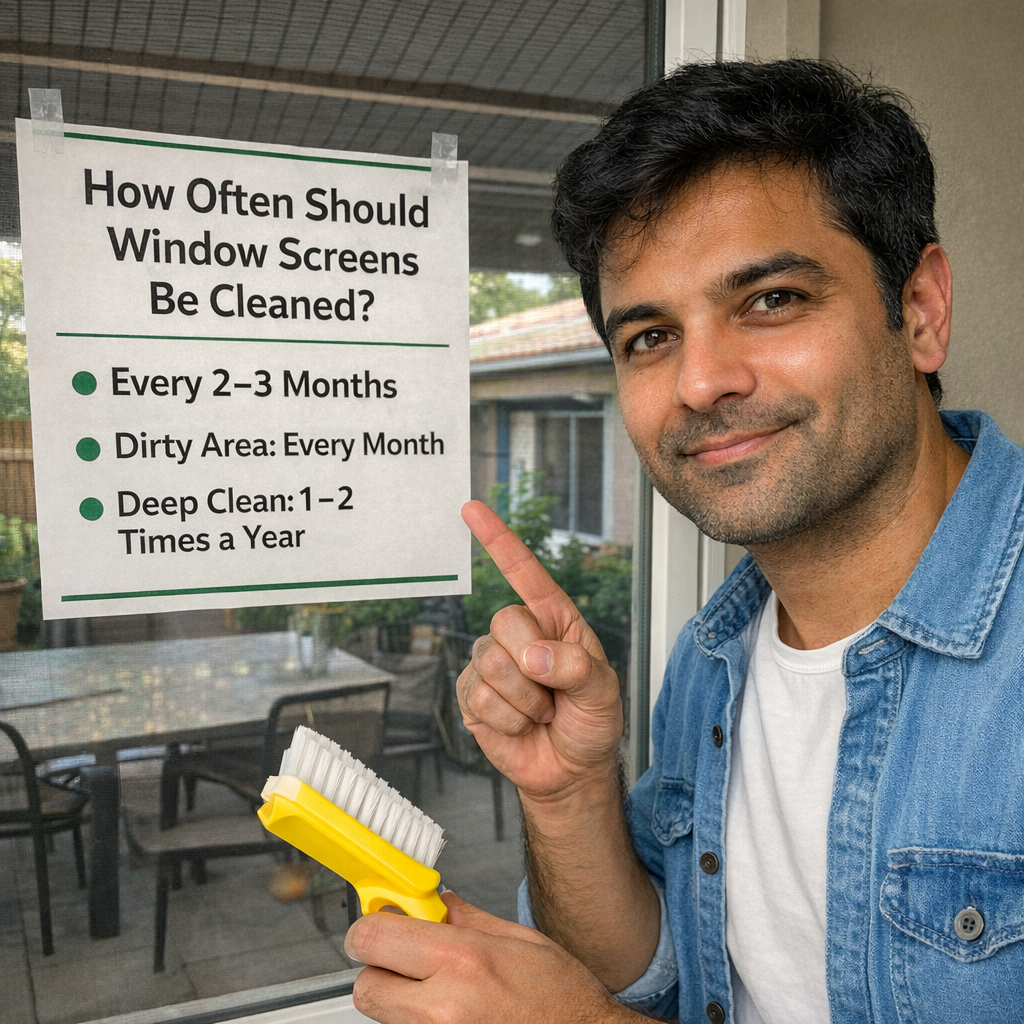
How often you clean really depends on where you live and how much the area is used.
- Light cleaning: Every 2 to 3 months
- Give your screens a thorough deep clean about twice a year, preferably during spring and fall.
You may need to clean more frequently if you live near a busy road, have pets, or open windows often. Regular maintenance ensures your knowledge of how to clean window screens remains practical and effective.
Best Way to Clean Window Screens
The most effective method for regular maintenance includes these steps:
- Remove the screen if possible
- Brush or vacuum both sides to remove dust
- Wash with mild soap and warm water
- Rinse using a low-pressure flow
- Air dry completely before reinstalling
Following these steps guarantees a successful outcome for anyone learning how to clean window screens efficiently.
How to Clean Window Screens Indoors
Cleaning window screens indoors is simple and works well for apartments or windows where the screens cannot be removed. Doing it properly helps your home stay cleaner, keeps the window frames in good condition, and improves airflow.
Step 1: Prepare the Area
Start by protecting the area around the window. Lay old towels or a sheet under the window to catch dust, debris, or any water. Move small furniture or objects away from the window so you have enough space to work safely.
Step 2: Remove Dust
Before using water, remove loose dust and debris. This makes cleaning easier and prevents dirt from smearing.
Tools for this step:
- Vacuum cleaner with soft brush attachment
- Soft-bristle brush
- Lint roller
Step 3: Prepare Cleaning Solution
Begin by filling a bowl with warm water and adding a little mild dish soap. If there’s any grease or stickiness, you can also add a teaspoon of white vinegar.
Step 4: Wipe the Screen
Dip a microfiber cloth into the solution and wring it out. Wipe the screen softly, starting from the top and moving downward. Use a toothbrush for corners and edges. This ensures proper how to clean window screens technique without soaking them indoors.
Step 5: Dry the Screen
Dry with a clean microfiber cloth and leave windows slightly open for airflow.
Extra Tips for Indoor Cleaning
- Clean every 2–3 months
- Wipe with dryer sheet or anti-static cloth
- Brush weekly to prevent buildup
- Use slightly stronger soap for greasy screens
How to Wash Window Screens Outdoors

Washing window screens outdoors is the best way to deep clean screens that are very dirty. When you take screens outside, you can use water freely, rinse thoroughly, and scrub both sides without worrying about making a mess inside your home. Outdoor cleaning is especially useful in spring or fall when pollen, dust, and outdoor debris are heavy. Cleaning screens this way also helps them last longer and keeps your view clearer.
Step 1: Remove the Screen Carefully
The first step is to take the screen out of the window frame. Gently push up or pull out the tabs or clips that hold it in place. Each window type may have a slightly different method, so take note of how the screen is attached before removing it. Place the screen flat on a clean surface such as a driveway, patio floor, or a large towel. This keeps it stable and prevents it from bending or getting damaged.
If you are cleaning more than one screen, you can use small pieces of tape or labels to mark which window they came from. This makes it easier to put them back later in the correct place.
Step 2: Brush Away Loose Dirt
Before getting the screen wet, remove loose dust, pollen, and debris. Use a soft-bristle brush or any gentle scrubbing brush to brush the surface. Brush slowly and softly on both sides. This step helps remove the loose dirt so it does not turn into sticky mud when water is added.
Pay attention to the corners and the edges of the screen frame because dirt often collects there. If pollen or cobwebs are heavy, brushing first makes washing much easier.
Step 3: Wash the Screen with Soapy Water
In a bucket, mix warm water with a mild dish soap. Dip a sponge or soft brush into the soapy solution and gently scrub the mesh. Work in small sections and use light pressure. Move the brush in gentle circular motions to lift dirt without damaging the screen material. Focus on areas where grime and buildup look heavier.
Do not scrub too hard because strong pressure can stretch the mesh or bend the frame. Mild soap and a soft brush are enough to remove built-up dirt.
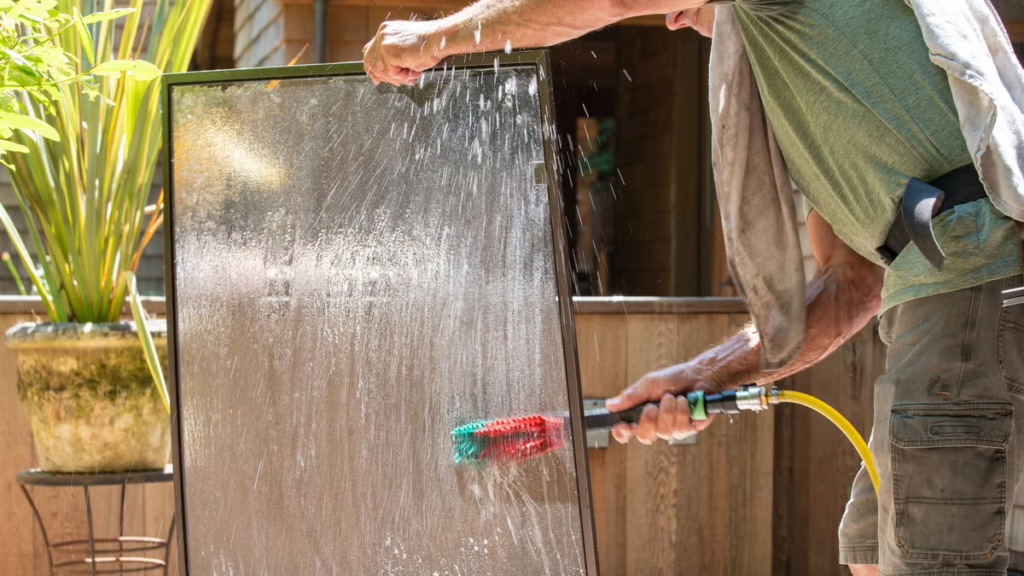
Step 4: Rinse Thoroughly with a Hose
Once you have scrubbed the screen well, it’s time to rinse away the soap and dirt. Use a garden hose with a low pressure spray. High pressure can damage the screen or separate the mesh from the frame, so keep the water gentle. Start spraying from the top and let the water run down. Rinse both sides of the screen to make sure all soap and dirt are washed away.
If you see soap residue remaining, continue rinsing until the water runs clear. Soapy water left on the mesh can attract more dust later, so rinsing well is important.
Step 5: Air Dry Completely Before Reinstalling
After rinsing, let the screen dry completely before putting it back in the window. Shake off any excess water and then stand the screen upright against a wall, fence, or other support. Good airflow helps the screen dry faster. In warm weather, screens may dry in a couple of hours, but in cooler or humid weather it may take longer. Making sure the screens are fully dry prevents mold and protects the frame.
Deep Cleaning Tips for Extremely Dirty Screens
- Vinegar Solution: Mix equal parts vinegar and warm water, spray, scrub, and rinse
- Baking Soda Paste: Mix paste, apply to stubborn spots, scrub lightly, rinse
Easy DIY Cleaning Methods Without Removing Screens
- Use a lint roller for quick dust removal
- Press microfiber cloths on both sides to clean simultaneously
- Vacuum monthly with brush attachment
Common Mistakes to Avoid
- Using pressure washers
- Scrubbing with hard brushes
- Reinstalling damp screens
- Ignoring window frames
Avoiding mistakes ensures your how to clean window screens efforts are long-lasting.
Expert Tips and Pro Cleaning Hacks
- Clean on cloudy days to avoid streaks
- Label multiple screens
- Add a drop of fabric softener to rinse water
- Store screens upright
How Clean Screens Improve Different Window Styles
Single Hung Windows: Improves airflow through the lower sash
Awning Windows: Prevents muddy residue and water stains
Black Windows: Enhances appearance dramatically
Maintaining Clean Screens Year-Round
- Vacuum lightly every month
- Wash after pollen season
- Clean before winter storage
- Inspect for tears
Following this ensures you always know how to clean window screens effectively throughout the year.
FAQs About Cleaning Window Screens
1. How can I clean window screens without removing them?
You can clean screens in place by vacuuming with a soft brush attachment to lift dust and debris. Follow up with a damp microfiber cloth or a lint roller for finer particles. For stubborn spots, lightly mist with a mild soap solution and gently scrub with a soft brush. This method saves time and keeps screens intact.
2. How often should window screens be cleaned?
Light cleaning every 1–3 months keeps dust and pollen under control, while a deep cleaning twice a year — in spring and fall — ensures your screens stay clear. Homes in dusty or high-pollen areas may require more frequent maintenance.
3. Is vinegar safe for cleaning window screens?
Yes, diluted vinegar is a natural, non-toxic cleaner that effectively removes grease and pollen. Avoid prolonged contact with metal frames to prevent any potential finish damage. Vinegar is an eco-friendly alternative to harsh chemicals.
4. Can I use a pressure washer on screens?
High-pressure water can tear the mesh and warp frames, so it’s not recommended. If rinsing with a hose, use a gentle spray or low flow to remove dirt safely without causing damage.
5. Should I clean the window frames along with the screens?
Absolutely. Dirt and debris often accumulate in frame channels and edges. Cleaning frames prevents particles from returning to freshly cleaned screens and keeps the entire window area spotless.
6. How do I remove stubborn grime or stains from screens?
After vacuuming, apply a warm soapy water solution and let it sit for a few minutes. Gently scrub with a soft-bristled brush or toothbrush, then rinse with low-pressure water. This method removes buildup without harming the mesh.
7. Can screen cleaning improve indoor air quality?
Yes. Dust, pollen, and allergens trapped in screens can enter your home when left uncleaned. Regular maintenance ensures cleaner air flows inside, reducing allergens and improving overall indoor air quality.
8. What tools work best for cleaning screens?
Use microfiber cloths, soft-bristle brushes, lint rollers, and a vacuum with a brush attachment. Avoid abrasive scrubbers or stiff brushes, which can weaken or tear the mesh over time.
9. Should screens be cleaned indoors or outdoors?
Deep cleaning is easier outdoors — you can rinse screens with water and let them air dry without making a mess indoors. Ensure screens are completely dry before reinstalling to prevent mold or mildew.
10. Can regular cleaning extend the life of window screens?
Yes. Routine cleaning removes harmful debris, reducing strain on the mesh and frames. Inspecting screens during cleaning also helps detect small tears or damage early, keeping screens functional longer and saving replacement costs.
Conclusion
Properly cleaning window screens may seem simple, but it greatly improves the comfort, air quality, and appearance of your home. Clean screens allow better airflow, reduce allergens, and make windows look well-maintained. From single hung windows to awning windows and modern black frames, knowing how to clean window screens is essential for every home.
With the right tools, techniques, and regular maintenance, screen cleaning becomes manageable and highly effective. Start with light monthly cleaning and schedule deep washes twice a year. Keeping screens clean ensures your home feels brighter, healthier, and more welcoming year-round.
